
Last updated November 25, 2026
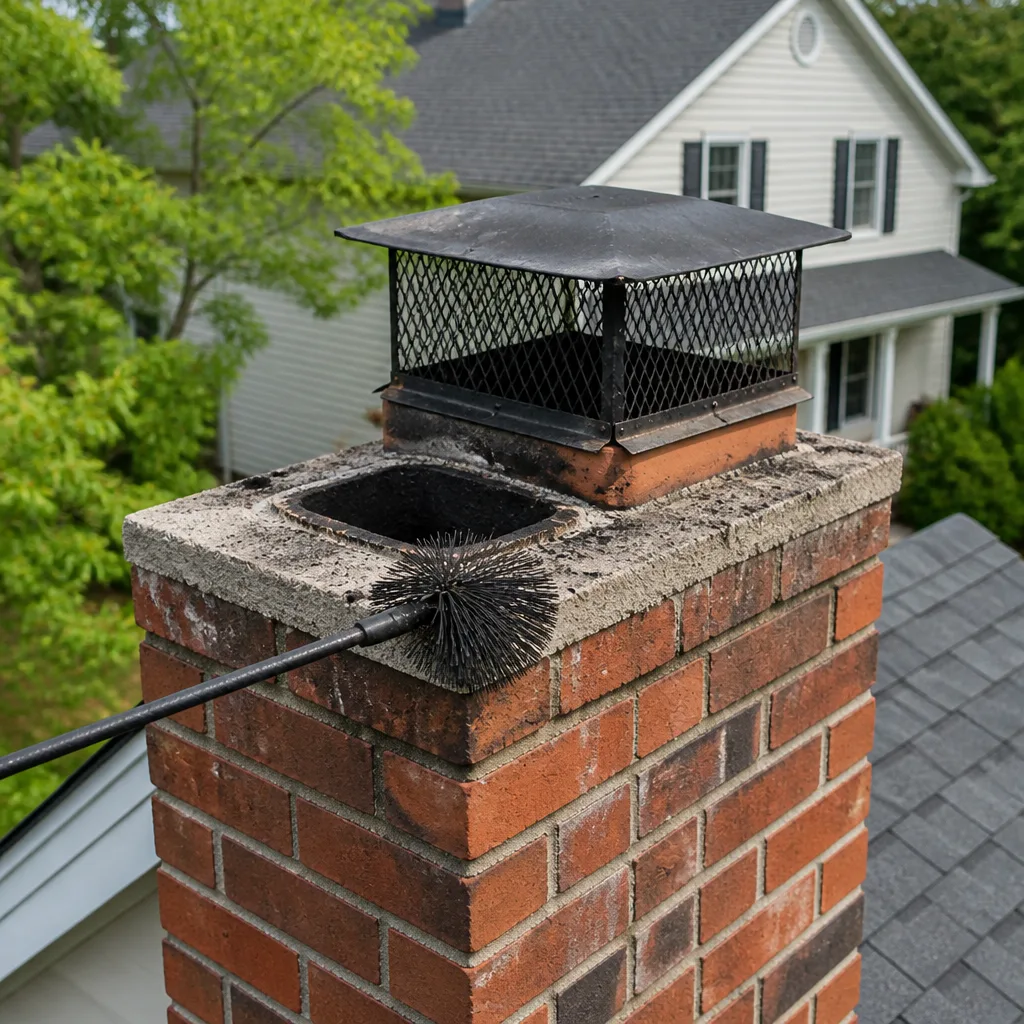 Sweep & inspection
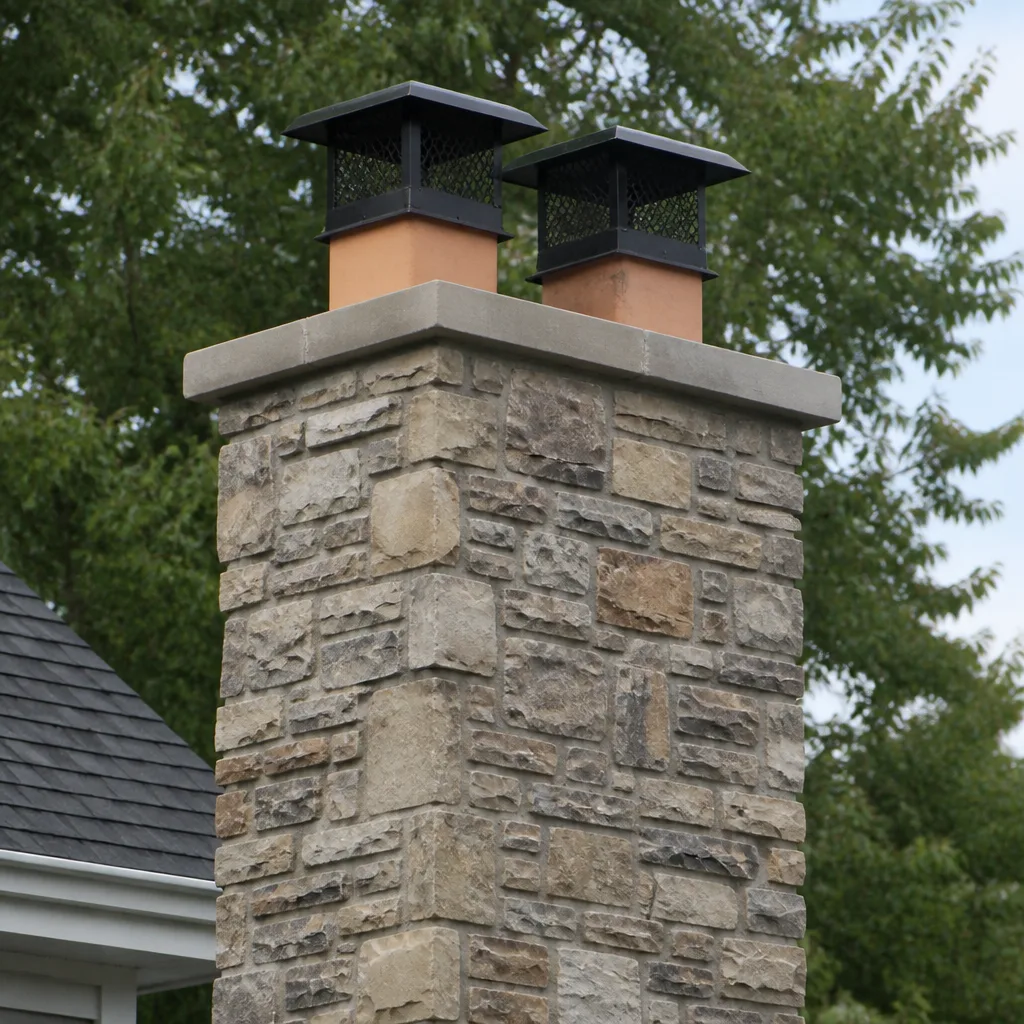 Caps & crowns
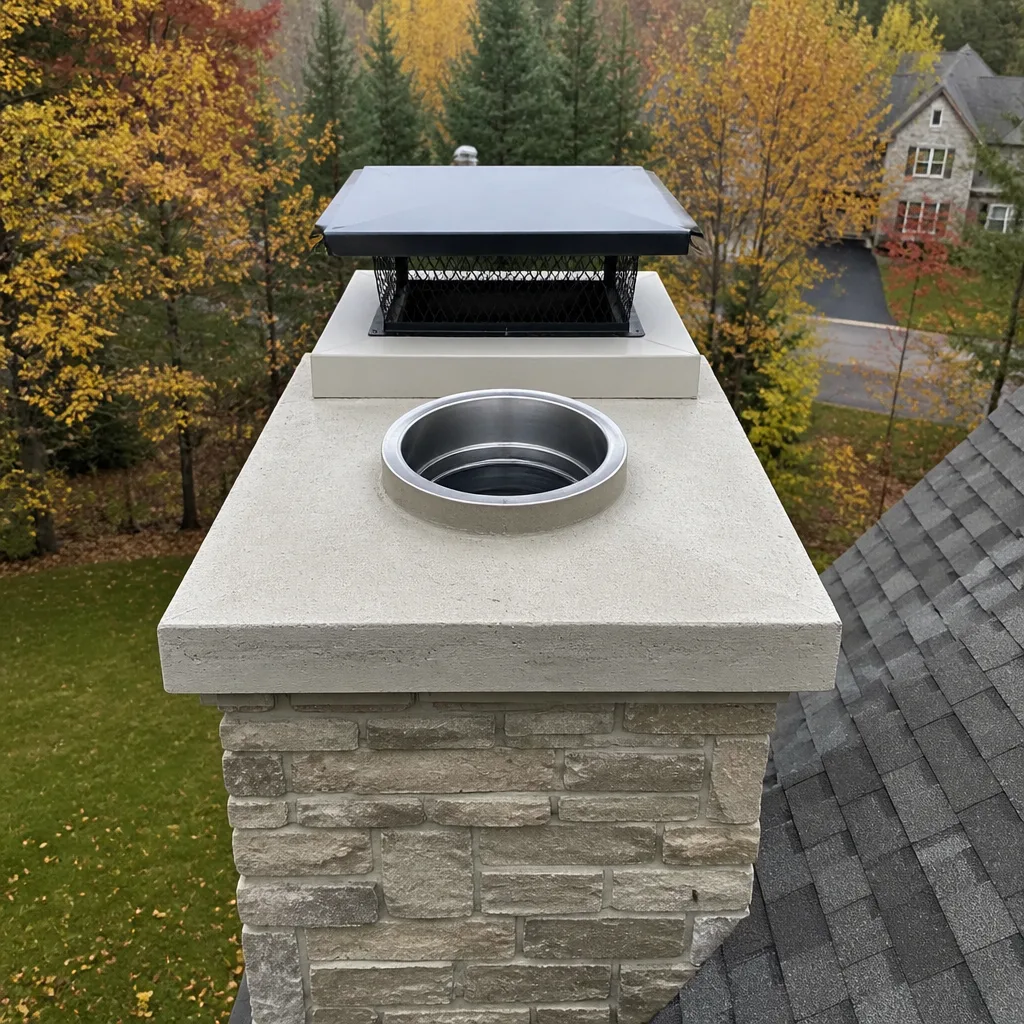 Flue relining
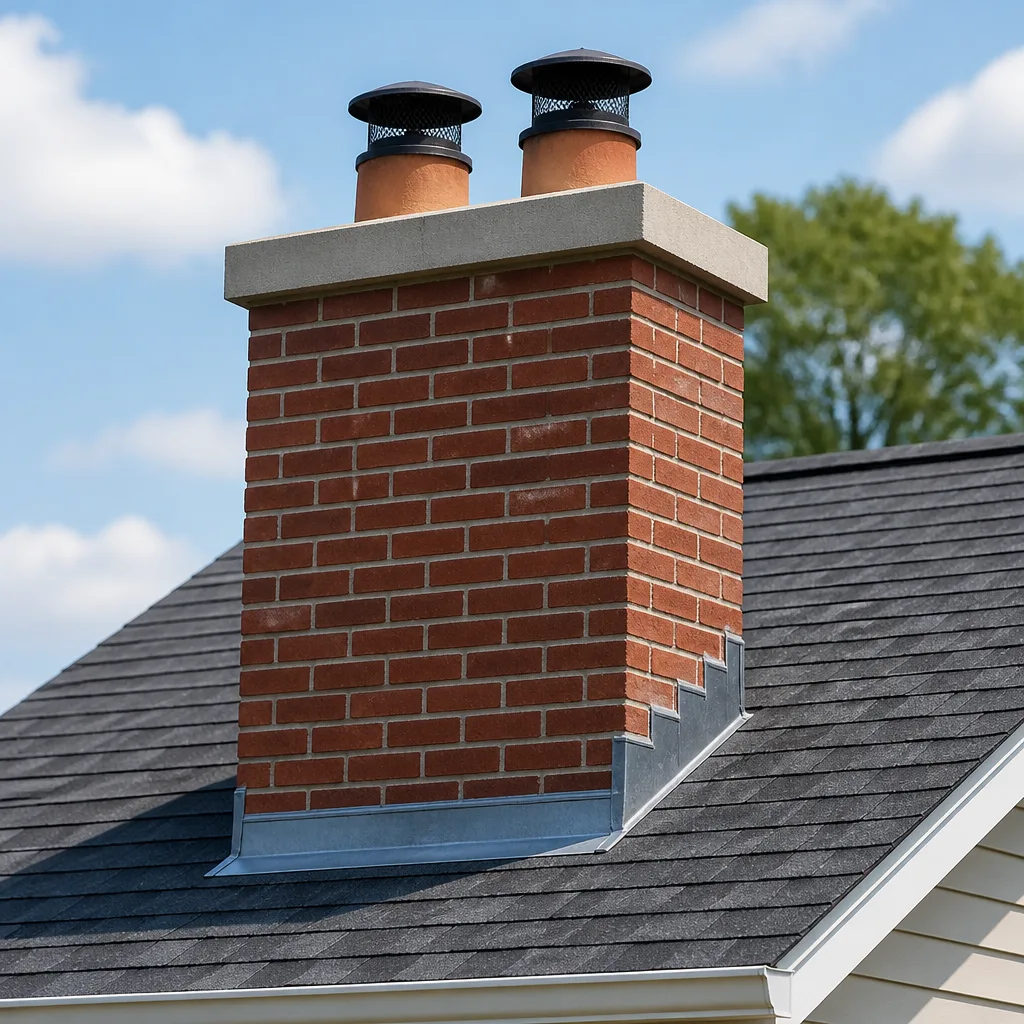 Masonry repair
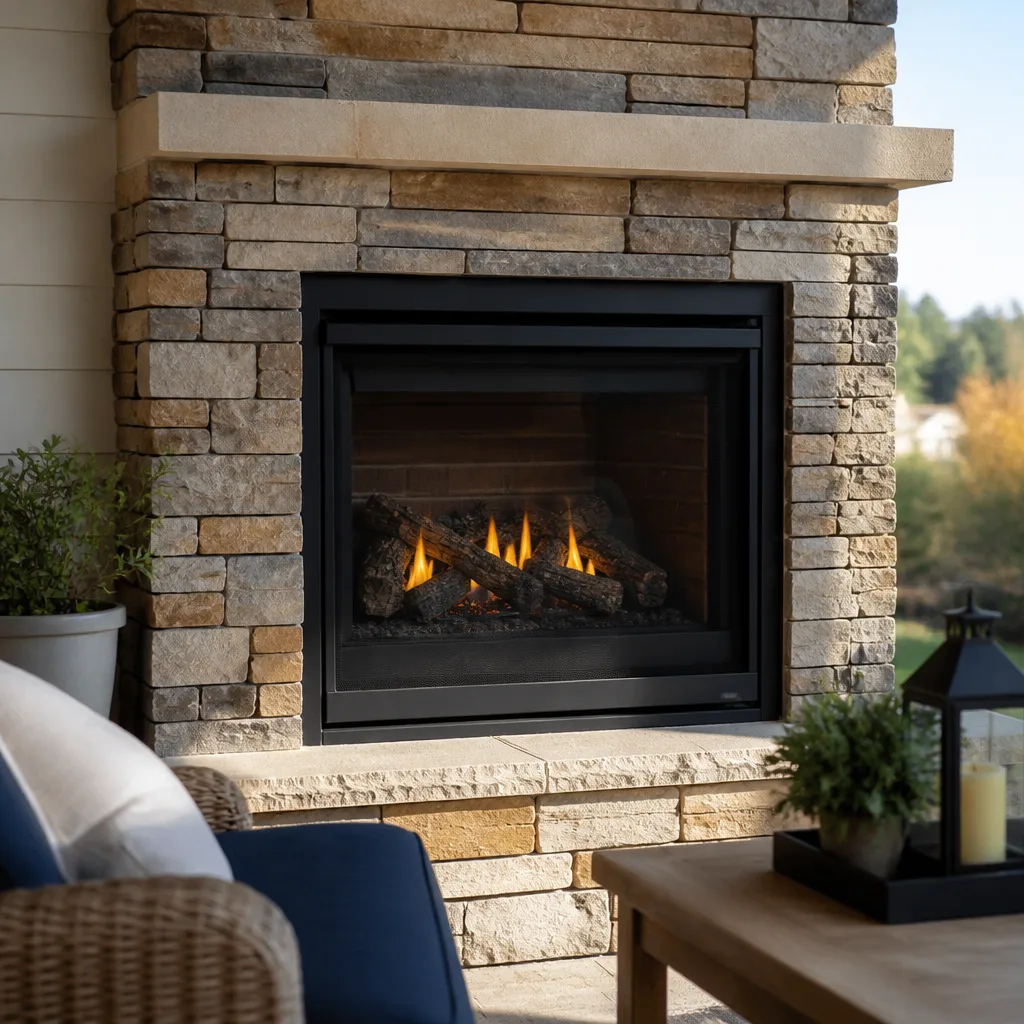 Gas fireplace service
Level 1 sweep and inspection to the NFPA 211 annual standard - flue, crown, cap, and flashing checked and photographed
Chimney sweep logs do not sweep chimneys. They loosen some creosote - which then falls where a brush and vacuum still have to collect it.
Chimney Cleaning Warning Signs: A White Rock Homeowner’s Reference Guide
That white chalky stain on your chimney brick isn’t a cosmetic quirk, and it isn’t just weather doing its thing. It’s efflorescence: direct evidence that water is moving through the masonry and dissolving mortar salts from the inside out. Most White Rock homeowners read chimney warning signs wrong because they match each symptom to the wrong cause. A smoky smell in July gets blamed on drafts. A cracked crown looks like ordinary aging. A musty odor points toward the HVAC. This guide decodes what each sign actually tells you about the system underneath, so a small observation doesn’t turn into a liner replacement or masonry demolition.
Quick Answer
Chimney cleaning warning signs in White Rock fall into three groups: exterior signs (efflorescence, spalling, staining, cracked crowns), interior signs (odor types, smoke rollout, slow draft), and operational signs (pilot light behavior, weak fire, creosote smells). Anything involving a smoky, acrid, or sulfurous odor inside the living space, visible smoke rollout, or a pilot light that keeps going out deserves a professional inspection within days. Staining, mild cap wear, and light efflorescence can usually be scheduled at your next cleaning. The rule of thumb: anything touching air quality or combustion is urgent; anything touching aesthetics usually isn’t.
Styles & brands we work with
- Sweep & inspection
- Caps & crowns
- Flue relining
- Masonry repair
- Gas fireplace service
Table of Contents
- Exterior Warning Signs: What They Actually Mean
- Interior Odors and What Each One Reveals
- Smoke Rollout, Slow Draft, and Pilot Light Behavior
- Urgent Signs vs. Signs That Can Wait
- Why Chimney Signs Get Misdiagnosed as HVAC Problems
- What a Proper Annual Chimney Inspection Covers
- White Rock Weather, Housing, and Chimney Wear
Exterior Warning Signs: What They Actually Mean
Walk outside and look up. Your chimney exterior tells a story most homeowners scroll past. Each stain, crack, and discoloration corresponds to a specific root cause, and learning to distinguish them is the single most useful skill for preventing expensive chimney work in White Rock.
Efflorescence is the most underread warning sign in the field. That white, chalky, salt-like bloom on brick surfaces is moisture moving through the masonry and pushing dissolved salts to the surface as it evaporates. It doesn’t mean water is brushing the outside of your chimney; it means water is inside the masonry, dissolving mortar from within. Left long enough, efflorescence graduates into spalling: the brick face itself begins to flake and shear off.
Spalling and cracking on brick faces indicate the masonry has been saturated long enough for water to reach the internal structure. Dark vertical streaks below the crown usually mean the crown itself has failed: water pools on a cracked crown, runs down the sides, and finds its way into the flue. Rusted or streaked cap surfaces point toward missing spark screens or a cap too small for the flue.
- White powdery stain: efflorescence – water passing through masonry, dissolving mortar.
- Peeling, flaking brick faces: spalling – moisture has reached the internal brick structure.
- Dark vertical streaks below the crown: crown cracking, allowing water to route down the flue exterior.
- Rust streaks on the cap: aging cap, missing screen, or wrong-sized cap allowing water intrusion.
- Green or gray streaking along the flue exterior: biological growth, indicating chronic moisture.
- Visible tilting of the chimney itself: structural movement, addressed only after inspection.
On a proper chimney cap & crown installation, the crown is shaped so water sheds away from the flue rather than pooling on top – which is why we treat crown work as root-cause repair, not cosmetic patching. Our technicians have up to 10 years of experience reading these surfaces specifically, and Crown and cap assessment is part of every full inspection.
One useful rule: if a stain can be brushed off with a stiff brush, it’s likely early efflorescence. If the brick face flakes away with the brush, spalling has begun. If the stain is definitely moisture but reached the interior brick, a cap, crown, or flashing repair is the correct next step – not just another cleaning.
Interior Odors and What Each One Reveals
The smell inside your home in the off-season is a diagnostic tool most people never think to use. Odors differ by combustion source, buildup type, and flue condition. Learning to distinguish them tells you a lot about what’s going on inside the flue before anyone climbs down from the roof.
An acrid, sharp smell in the summer, especially during hot or humid afternoons, is the classic sign of creosote re-volatilizing in a warm flue. Creosote is the residue of incomplete combustion. When a chimney has significant buildup and no fire has been burning to move air up the flue, that buildup forms a smell that regularly gets misdiagnosed as damp carpet or a stale HVAC filter.
A musty or damp smell points to water intrusion rather than buildup. Water reaching the flue through a failed crown, a poorly fitted cap, or missing flashing creates a persistent, damp-earthy odor even on dry days. If you also see efflorescence on the exterior, that’s confirmation. Musty odors almost always stem from moisture, not a dirty flue, and sweeping alone won’t clear them.
A sulfurous or rotten-egg smell requires immediate attention. It can indicate a blocked flue pushing combustion exhaust back into the home, and exhaust contains carbon monoxide. Whether the source turns out to be a bird nest, a fallen cap fragment, or a collapsed flue tile, this odor is never one to wait on.
- Acrid or sharp: creosote buildup re-volatilizing in a warm flue.
- Musty or earthy: water intrusion from a failed crown, cap, or flashing.
- Sulfurous or rotten-egg: blocked flue or combustion exhaust backing into the home – act immediately.
- Smoky but not otherwise distinctive: draft problem or partial blockage, common after windy White Rock afternoons.
We handle firebox and damper issues alongside the flue itself through our fireplace repair work, because smells that seem to originate at the firebox often trace to the surrounding structure.
Smoke Rollout, Slow Draft, and Pilot Light Behavior
Operational signs – how the chimney behaves when you actually use it – are where most homeowners start keeping mental notes. These signs usually point to one of three root causes: blockage, structural failure, or a cap issue. The trick is knowing which one your symptom matches.
Smoke rollout is the most common operational complaint. A small puff when you first light a fire is normal; sustained rollout into the room is not. Smoke rolling out from behind the firebox, from the top of the fireplace opening, or once the fire warms up almost always indicates blockage or draft failure. The most frequent culprits are a bird or squirrel nest lodged in the flue, a fallen flue tile, or a cap that no longer fits the flue properly. A blocked flue can’t draw, and where it can’t draw, smoke enters the room.
Slow draft – the fire taking much longer than usual to catch, weak flame, smoke that hovers at the firebox opening – suggests partial restriction rather than full blockage. Alternating layers of soot and creosote reduce the flue’s effective diameter; a chimney that once drew well and now struggles likely has significant buildup.
Pilot light behavior on a gas fireplace or appliance tells a slightly different story. A pilot light that extinguishes on windy days, back-drafts, or fails to stay lit belongs in the “urgent” category. These point toward flue reversal or, on older equipment, combustion byproducts entering the home. If your gas fireplace pilot light becomes unreliable, stop using the appliance and get an inspection.
- Note when the sign happens: on lighting, on warming up, only on windy days, only when other appliances run.
- Look for smoke rolling from the top, bottom, or sides of the firebox opening.
- Check whether other fuel-burning appliances in the home (furnace, water heater) create a competing draft.
- Watch the pilot light on any gas appliance during wind events – an extinguished pilot is a stop-using signal.
- Record the pattern before calling for an inspection; that pattern tells the technician where to look first.
Urgent Signs vs. Signs That Can Wait
Categorizing warning signs is what keeps homeowners from panicking over a stain and, more importantly, from ignoring an actual hazard. The framework here is simple: anything tied to combustion, air quality, or structural movement gets acted on within days. Anything aesthetic or mild can wait for the next scheduled cleaning.
Act within days
- Sulfurous or rotten-egg odor inside the home. Potential carbon monoxide intrusion – stop using the fireplace and other fuel-burning appliances until inspected.
- Sustained smoke rollout into the living space. Full blockage or structural failure; do not use the fireplace.
- Pilot light extinguishing repeatedly on a gas appliance. Flue reversal or exhaust path issue.
- Visible tilting or shifting of the chimney structure. Masonry separation at the roofline, requiring evaluation.
- Loose or missing flue tiles, visible from the firebox. Liner integrity concern.
Address at the next scheduled visit
- Mild efflorescence. Early moisture intrusion, correctable with cap or crown work.
- Small hairline cracks in the crown or stucco. Note, monitor, and schedule repair.
- Faint acrid smell in the summer. Buildup residue – usually fine before next cleaning, treat the next sweep as the priority.
- Rust streaks on a worn cap. Plan replacement with the next cleaning.
- Mild soot staining on the firebox face. Cosmetic unless accompanied by rollout.
We won’t tell you masonry work is urgent when the camera says otherwise. If we recommend a repair, we show you the photograph and the reason – nothing is recommended without evidence you can see for yourself.
Why Chimney Signs Get Misdiagnosed as HVAC Problems
One of the most common things we hear in White Rock is “our HVAC guy said it wasn’t the furnace.” They’re often right. The chimney produces signs that look a lot like HVAC issues, and the two sometimes interact in ways that are genuinely hard to untangle.
Musty smells get attributed to a dirty HVAC filter or a refrigerant leak when the real source is water in the flue. Summer acrid smells get blamed on an AC running overtime when it’s creosote releasing in the heat. Carbon monoxide alarms get blamed on a leaky furnace when backdraft from a blocked flue is the real culprit. And because two appliances often share a chimney in older White Rock homes, one problem can present as another.
The way to tell the difference is with combustion testing and direct inspection. A draft test on the flue, a check of the gas appliance vent, and a look inside the firebox with a camera will separate cause from coincidence. If the pilot light goes out only when the range hood runs, that’s draft competition, not a failing valve. If the HVAC filter is clean but the smell persists, it’s not HVAC.
- If the smell disappears when the fireplace is sealed off from the room, suspect the chimney, not the HVAC.
- If a CO alarm trips only when a fireplace, furnace, or water heater runs, get the flue inspected before assuming the furnace is at fault.
- If rust shows up on the flue pipe, suspect water intrusion at the crown or cap, not humidity.
We work with chimney sweep and inspection services specifically, and we don’t subcontract. If the answer turns out to be HVAC, we say so. We just won’t guess when a camera inspection settles it.
What a Proper Annual Chimney Inspection Covers
An annual inspection is the single best way to catch warning signs before they become expensive repairs. A proper inspection in White Rock should cover every part of the system – not just the flue interior. Here’s what a full inspection actually looks like:
- Exterior assessment. Crown, cap, flashing, brick faces, mortar joints – checked for efflorescence, spalling, and moisture.
- Firebox and damper. Brick and refractory panels checked for cracks; damper operation tested.
- Flue interior. Camera inspection to evaluate liner integrity, creosote levels, and blockages.
- Appliance connections. Vent pipe, connectors, and any gas appliance venting tested for draft.
- Combustion appliance check. Furnace and water heater vent pathways confirmed clear.
- Photo report. Every condition documented with images you can review yourself.
We include a camera inspection and photo report on every visit, and the sweep is priced as a flat-rate before we schedule. That way you know what the visit costs before we arrive, and you can see exactly what’s happening inside your chimney afterward.
The full-system approach matters. Products like DuraFlex liners, HeatShield for flue liner restoration, and Olympia Chimney or Copperfield components are often what separate “deep clean” from “actual repair.” HeatShield specifically addresses a deteriorating flue liner without full liner replacement where the condition allows – it’s a capability most sweep-only services don’t offer. When we’re working on a White Rock chimney, we’re choosing the right material for the job, not whatever happens to be on the shelf.
White Rock Weather, Housing, and Chimney Wear
White Rock chimneys age in particular ways. Mild winters and warm summers mean fireplaces often sit unused for long stretches, then get pushed hard on the first cool evening of the season. That cycle creates specific wear patterns we see repeatedly on properties throughout White Rock.
Summer heat drives creosote re-volatilization, which is why so many White Rock homeowners notice chimney smells in June and July rather than in winter. Long dormant periods also let debris accumulate: bird nests in spring, leaf litter in fall, squirrels working their way into an unscreened flue. The first fire of the season is exactly when blockages tend to reveal themselves as smoke rollout.
White Rock’s older homes frequently have exterior chimneys with masonry that has absorbed years of ordinary rain and humidity. Efflorescence and spalling cluster on masonry chimneys where the crown has been allowed to crack. Water gets in at the crown, migrates through the brick, and works its way down to the roofline. Cap and crown work is one of the highest-leverage repairs on a White Rock chimney because it stops the cycle at the top.
Humidity matters here. In a humid summer, a cracked crown routes pooled water down the flue exterior, and by the next heating season the liner shoulder has absorbed it. Cap sizing matters too: a cap that’s slightly too small, or one with a rusted or missing screen, lets water in at the top of the flue even when the crown is sound. Small component problems, cheap to fix early, become liner problems.
One quick observation for White Rock homeowners: look at your cap and crown after the first heavy rain of the season. If water is ponding on the crown, or if you can see light through a rusted cap screen, that’s a scheduled repair. If you see streaking down the sides, that’s a next-visit item. If you see smoke backing out of the firebox at the top of the flue opening, that’s an urgent call.
Common Mistakes to Avoid
- Treating efflorescence as cosmetic. Many White Rock homeowners assume the white bloom is just weather staining and paint over it. Painting seals the water inside the masonry and accelerates spalling. It’s a sign of active moisture intrusion, not surface dirt.
- Waiting for smoke rollout to clear up on its own. Rollout doesn’t resolve when a blockage is present; it usually worsens. If a fire can’t draw, stop using the fireplace and get it inspected.
- Ignoring a musty smell because “the HVAC guy checked it.” A musty smell is water in the flue or structure, not a filter problem. Get the chimney inspected separately before scheduling another HVAC visit.
- Skipping the sweep because the fire “burned fine last year.” Fires can burn fine while buildup accumulates. Annual sweeps are how the buildup gets caught before it changes how the fire burns.
- Hiring a generalist for a chimney repair. A handyman who also sweeps chimneys may not have access to the specific components a repair needs. Repairs that get pushed to “we’ll get the part” drag into the next heating season.
- Installing a cap without checking the crown. A new cap over a cracked crown still lets water route down the flue. Cap and crown are two halves of the same repair.
- Assuming a small hairline crack is nothing. Hairline cracks in the crown expand with each rain cycle. A cheap early repair becomes a full crown rebuild later.
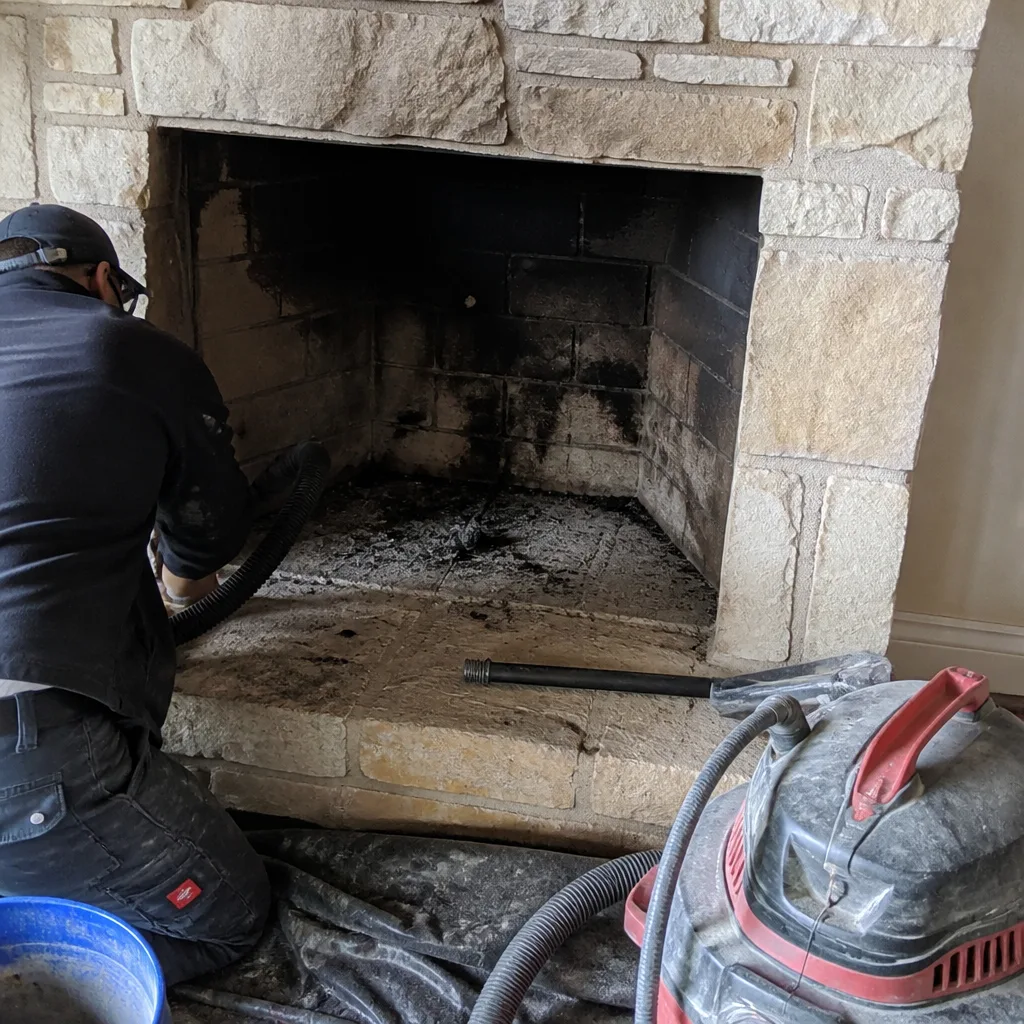
See the difference
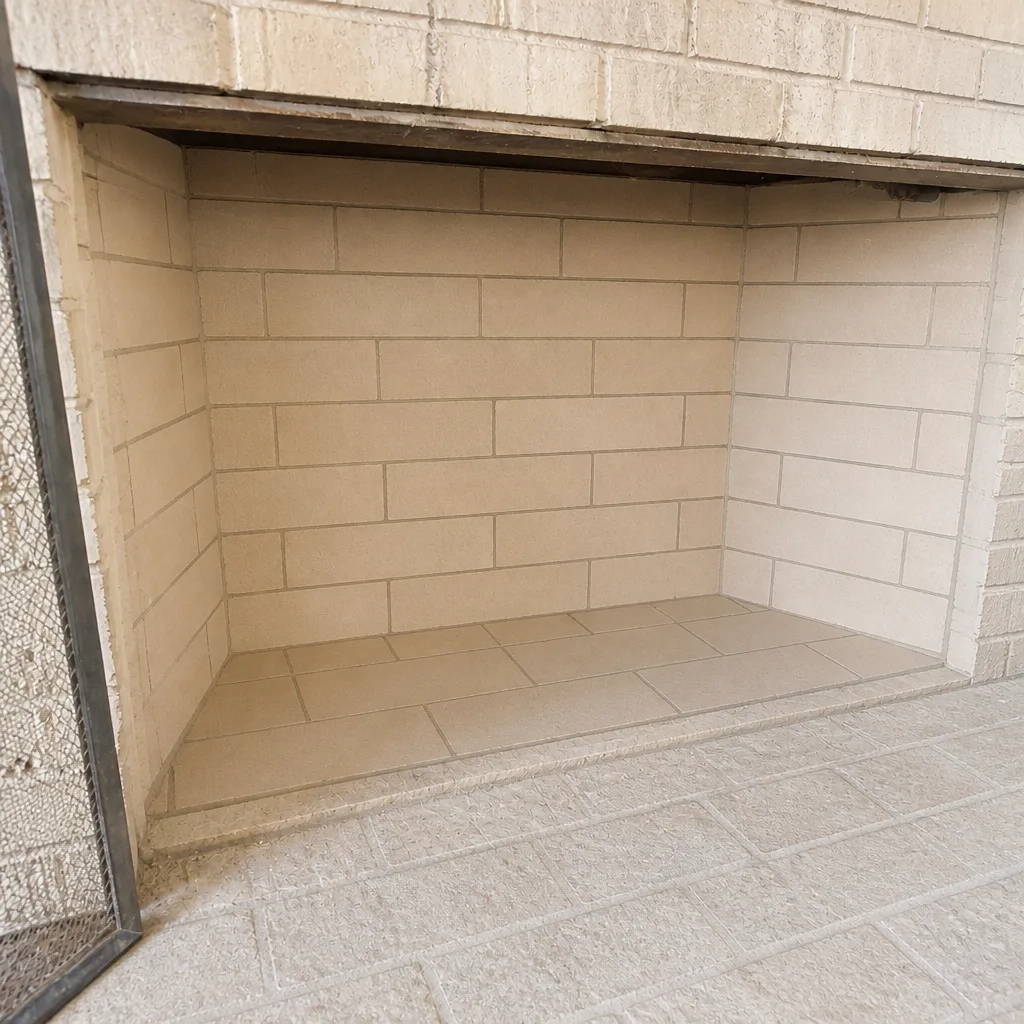
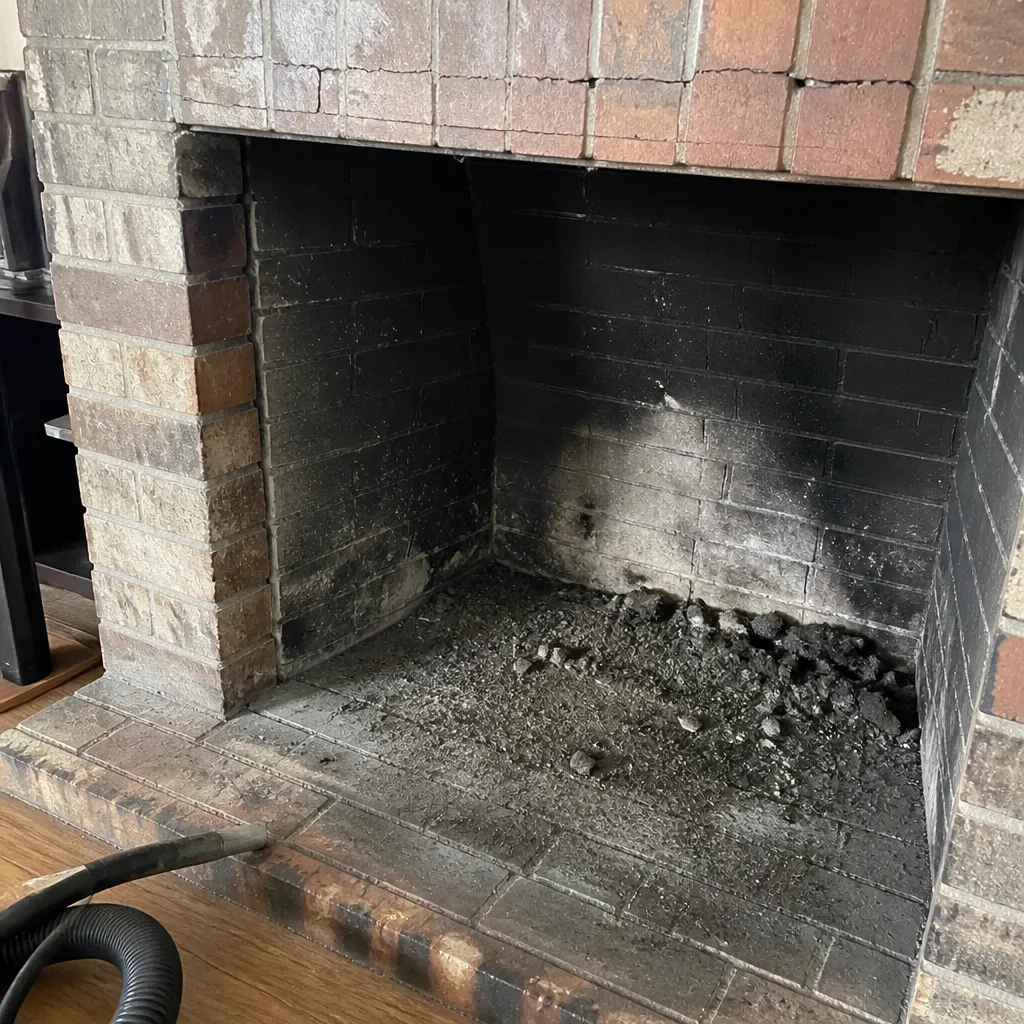 Before
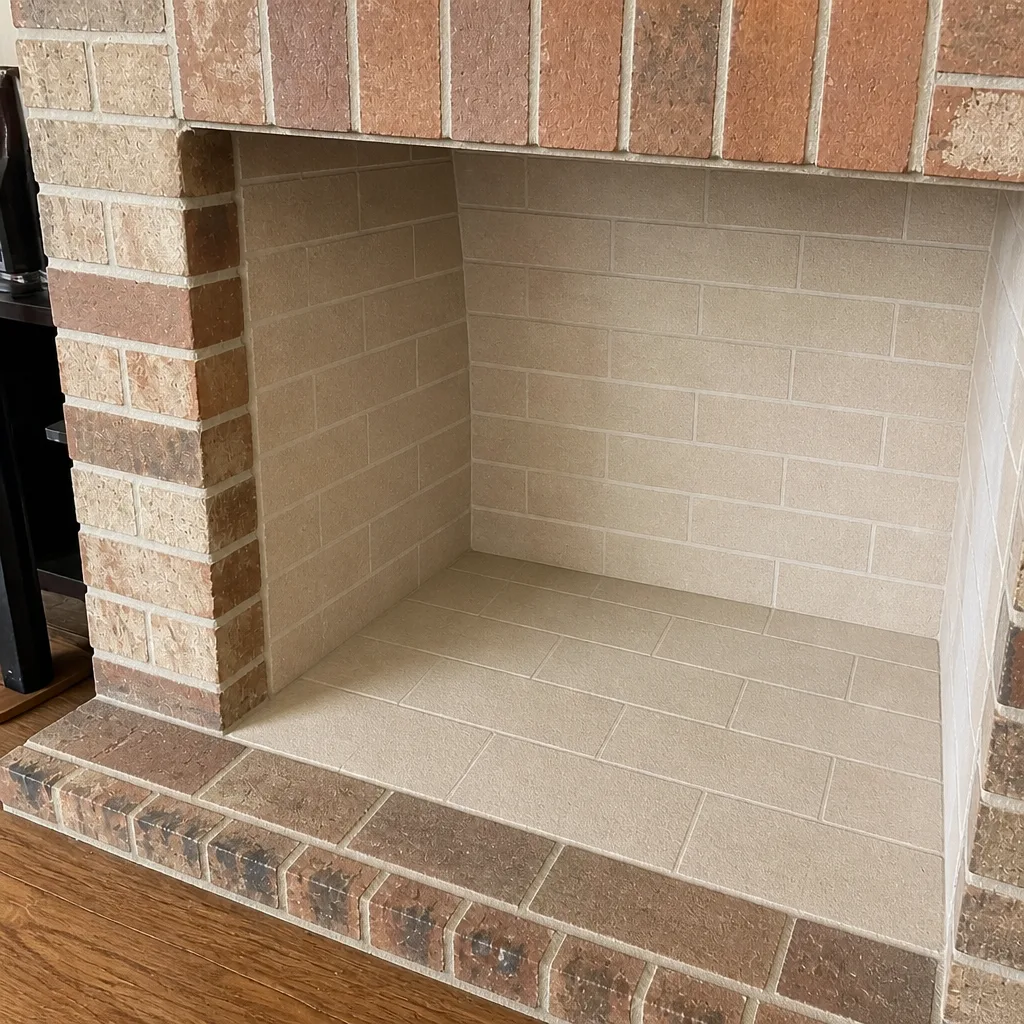 After
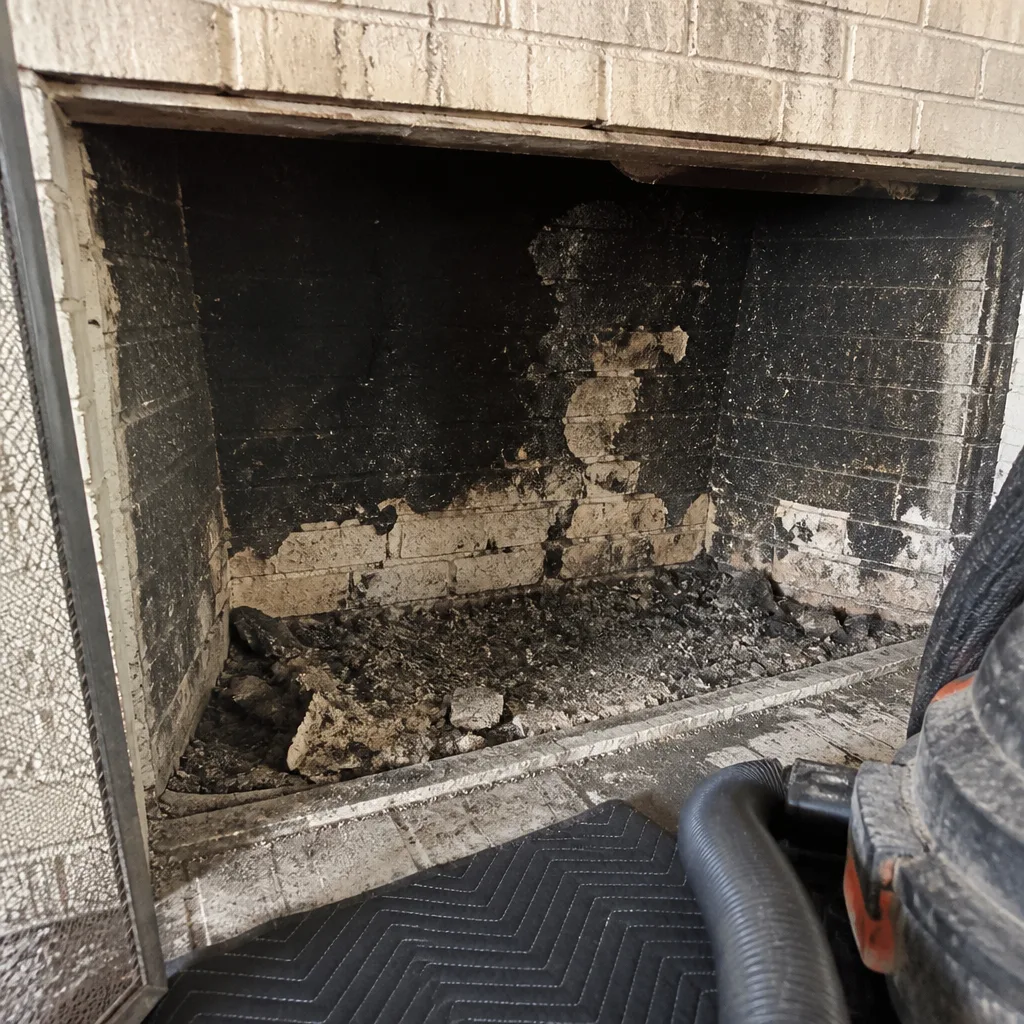 Before
 After
 Before
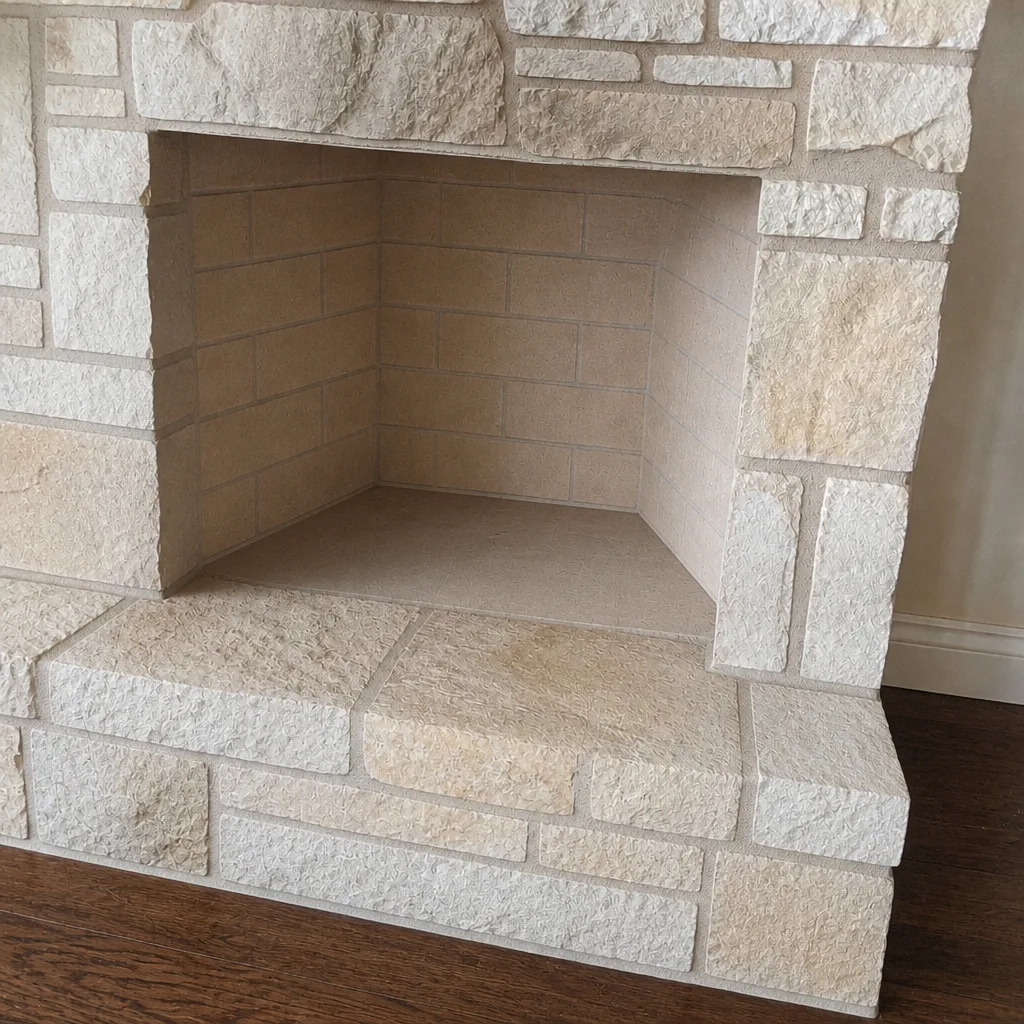 After
When to Call a Professional
Call for an inspection if you’re seeing any of the following: sulfurous or musty odors inside the home, sustained smoke rollout when the fireplace is running, a gas appliance pilot light that keeps going out, visible efflorescence with spalling brick, a chimney structure that appears to tilt or shift, or a cap that’s missing or visibly failing. Same list applies if you’ve never had the chimney inspected and you’re unsure of its last service date – the inspection is how you find out.
Signs you can schedule at your next cleaning: mild efflorescence, hairline crown cracks, faint summer acrid odor, rust streaks on a cap, or a chimney that hasn’t been swept in a while but is behaving normally. Chimney Sweep White Rock offers free estimates in White Rock – call (844) 877-7238. We answer 24/7. Fast dispatch from 7am to 7pm, Sunday through Friday.
Our full system coverage means we handle the flue, the firebox, the crown, and the cap in one visit. No second contractor, no referral out. Just the right material for the job and a photo report at the end.
Frequently Asked Questions
Efflorescence is the white, chalky deposit that appears on brick surfaces when moisture migrates through masonry and evaporates at the surface, leaving dissolved salts behind. It matters because it’s direct evidence that water is actively moving through the brick and dissolving mortar from the inside – not surface dirt, not cosmetic weathering. If you’re seeing efflorescence on a White Rock chimney, get the crown, cap, and flashing checked to identify where the water is entering. Call (844) 877-7238 for an exact quote – estimates are free.
Once a year, at minimum, plus a sweep whenever buildup reaches the point where draft is affected. White Rock chimneys used seasonally benefit from an annual inspection before the first fire of the season. If you burn frequently or burn wood that leaves heavy residue, a second mid-season inspection is worth it. Call (844) 877-7238 for an exact quote – estimates are free.
A musty smell usually means water is entering the flue or surrounding structure through a failed crown, a wrong-sized cap, or missing flashing. It’s an exterior water problem, not an interior buildup problem, and sweeping alone won’t fix it. Call (844) 877-7238 for an exact quote – estimates are free.
Small hairline cracks can typically be monitored until the next scheduled visit. Cracks that are visibly routing water down the sides, or that have begun to affect the flue exterior, should be repaired sooner, because each rain cycle expands the crack and the moisture travels further. Call (844) 877-7238 for an exact quote – estimates are free.
An extinguished pilot on a windy day usually points to flue backdraft or a draft path that’s reversed by outside pressure – which means combustion byproducts may be entering the home. Stop using the appliance and get it inspected. A camera inspection of the flue typically identifies whether the cause is blockage, a cap issue, or a structural problem. Call (844) 877-7238 for an exact quote – estimates are free.
Usually not. A smoky or acrid smell in summer is more often creosote buildup re-volatilizing in a warm flue than a draft problem, because in summer the flue is warm and no fire is moving air through it. Summer smells that go away once the fireplace is used again almost always trace back to buildup. Call (844) 877-7238 for an exact quote – estimates are free.
The Bottom Line
Chimney warning signs in White Rock are almost always readable if you know what you’re looking at. Efflorescence and spalling are water traveling through masonry. Acrid summer smells mean creosote. Musty smells mean water intrusion. Sulfurous smells mean combustion exhaust inside the home – the only one that can’t wait. Smoke rollout and a failing pilot light point to blockage or structural failure. Sorting urgent from “not yet” is the whole game. When in doubt, an inspection with camera evidence settles it. Chimney Sweep White Rock handles the full system – the flue, the firebox, the crown, and the cap in one visit – so nothing gets pushed to a second contractor and nothing gets recommended without a photo you can see for yourself.
Call (844) 877-7238 for a free estimate. We answer 24/7. Fast dispatch from 7am to 7pm, Sunday through Friday. Our technicians have up to 10 years of experience reading these signs on White Rock chimneys. If you’re not sure whether what you’re seeing is urgent or a next-visit item, we’d rather look than guess. Explore Chimney Sweep White Rock for the full range of chimney services we handle.
Written by the team at Chimney Sweep White Rock.